

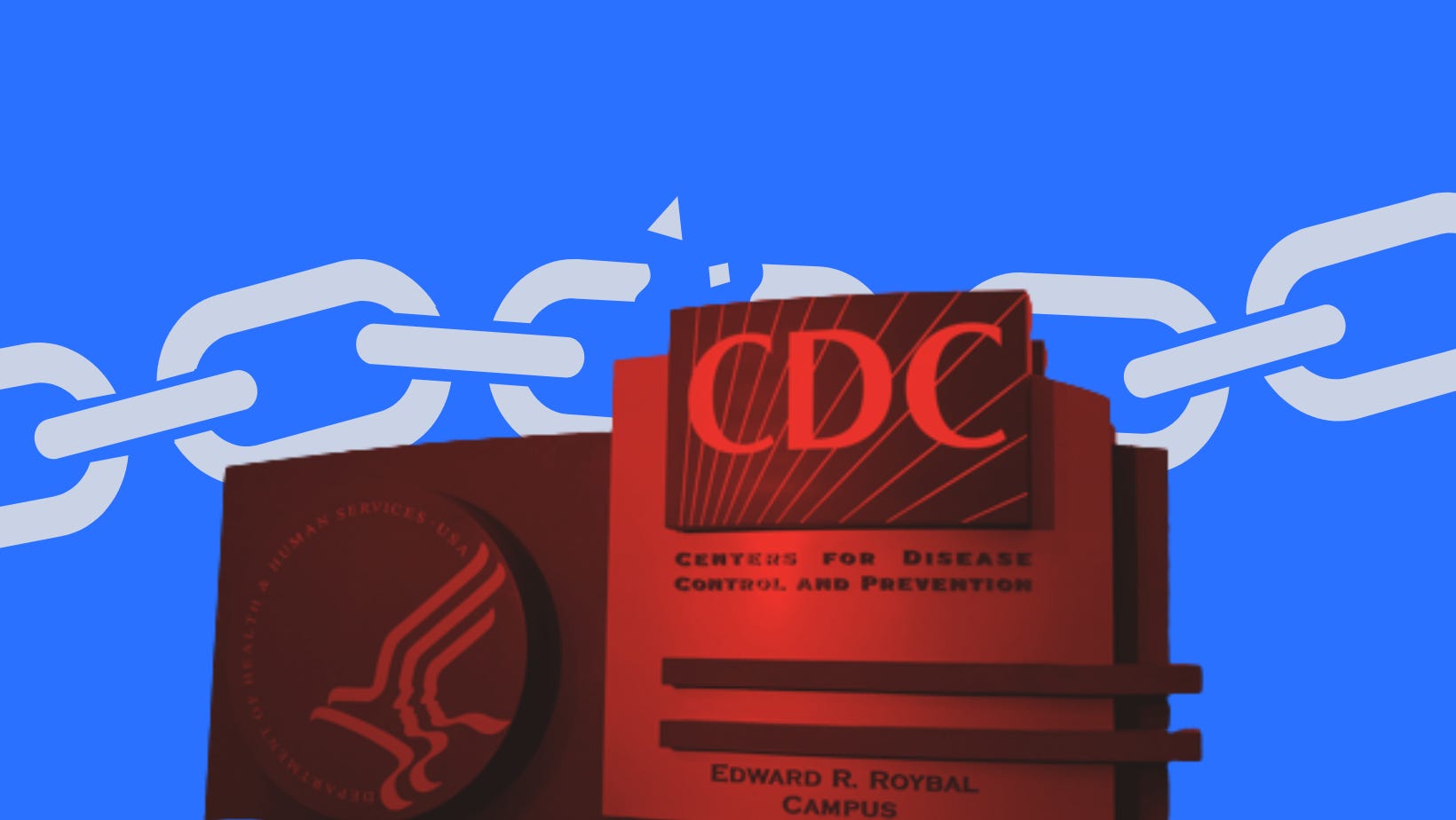
“A completely unreputable source of information.” That is how pediatrician Tim Snyder describes the CDC these days, and he is not alone. Health departments and professionals across the country have stopped looking to the CDC for guidance on vaccination and a range of other critical questions.
This is Exhibit A of a health care system failing the people it is supposed to serve — and it underscores what is at stake in November.
Reversing the cuts to health care and the attacks on science means changing who sits in Congress. That’s why tomorrow, AND hosts a Health Activist Town Hall with Democratic nominee for U.S. Senate in Texas, James Talarico, and legendary organizer Heather Booth, who has spent sixty years turning ordinary people into political power. RSVP here to join us in electing leaders who will make health care a policy priority>>
You’re likely seeing the impact of funding cuts and unqualified federal health leadership in your practice, too. In recent weeks alone
Some scientists are being discouraged from seeking government science positions after the completely inappropriate attacks against Dr. Fauci.
The FDA authorized new tobacco flavored pouches including “Cappuccino,” In a transparent effort to placate the tobacco industry,
Researchers have documented that Medicaid expansion has lowered mortality rates — except in one tragic area: firearm suicides.
A recent Senate hearing was a chance for Republicans and Democrats to work together on how to assure every American has basic coverage. Instead, Senator John Kennedy (R-LA) returned to a familiar complaint: that states are letting ineligible people stay on Medicaid. He put the question to Andy Schneider of Georgetown, one of the nation’s leading Medicaid experts: should states that do this be punished? Schneider’s answer was flat: states are not cheating.
There is a need to confront the monopolistic behavior of health care facilities, and hospitals above all. Consider one example reported by KFF Health News:
At Catawba Valley Medical Center in Hickory, North Carolina, for example, the cost of the procedure under a Blue Cross Blue Shield health plan this year was about $16,000, according to data from Serif Health, a San Francisco startup that collects recently released data from hospitals and insurers. Little more than an hour’s drive west, however, at Mission Hospital in Asheville, the cost of the procedure under the same health plan was around $40,000, or more than double, the data showed. Formed by the merger of the two largest hospitals in the region, Mission has little competition and more power to demand the higher price.
Same plan, same procedure, an hour apart — and more than double the price. That gap is the result of what happens when a merger leaves a region with no alternative.
We have addressed this before. For Medicare patients, President Ronald Reagan implemented part of the solution: prospective payment, in which the government pays a set price for a given procedure rather than whatever the hospital bills. It is a system I worked on for decades. And it is worth remembering who did it: a president known for his laissez-faire instincts oversaw the most significant regulatory intervention in American health care in a generation.
In order to focus Washington’s attention on health care affordability, we need to elect more Democrats to Congress this November. With a more balanced Congress, we will be able to advance the need to have affordable, accessible health care. No single doctor or nurse can fix a broken system alone. But thousands of us — organized, vocal, and mobilized — can elect the leaders who will.